
You Should Own Your AI
ZooClaw - An OpenClaw Distro for the Rest of Us

In January of this year, our engineers stopped writing code.
Not in the Cursor-replacing-VS-Code sense. Not in the “let AI autocomplete my functions” sense. They were having conversations with Coding Agents - autonomous ones that read their own logs, debug their own mistakes, run their own tests, and submit their own pull requests. The engineer’s job became something closer to an editor at a publishing house: review what comes in, approve or send it back.
Meanwhile, down the hall, our ops team was still alt-tabbing between three AI tools, copying and pasting by hand.

Same office. Two different centuries.
That was AI in early 2026: AGI had arrived. It just hadn’t been distributed yet.
In early February, I had a family trip to Changbai Mountain.
Before leaving, I set up OpenClaw on a spare laptop - back then, the hype around OpenClaw was still contained within the AI agent dev community. On the last day before departure, I connected it to Telegram so I could message it from my phone. The idea was simple: maybe I could still push some code on the road. I didn’t expect the trip to change how I think about AI products entirely.
Changbai Mountain is beautiful and freezing. Most of the time I was buried in a down jacket while my kids took photos and played with ice and snow. Every now and then I’d pull out my phone, talk to it, tell OpenClaw - sitting on a laptop back in the office - to write some code. Then I’d put the phone back in my pocket and go back to enjoying the scenery.
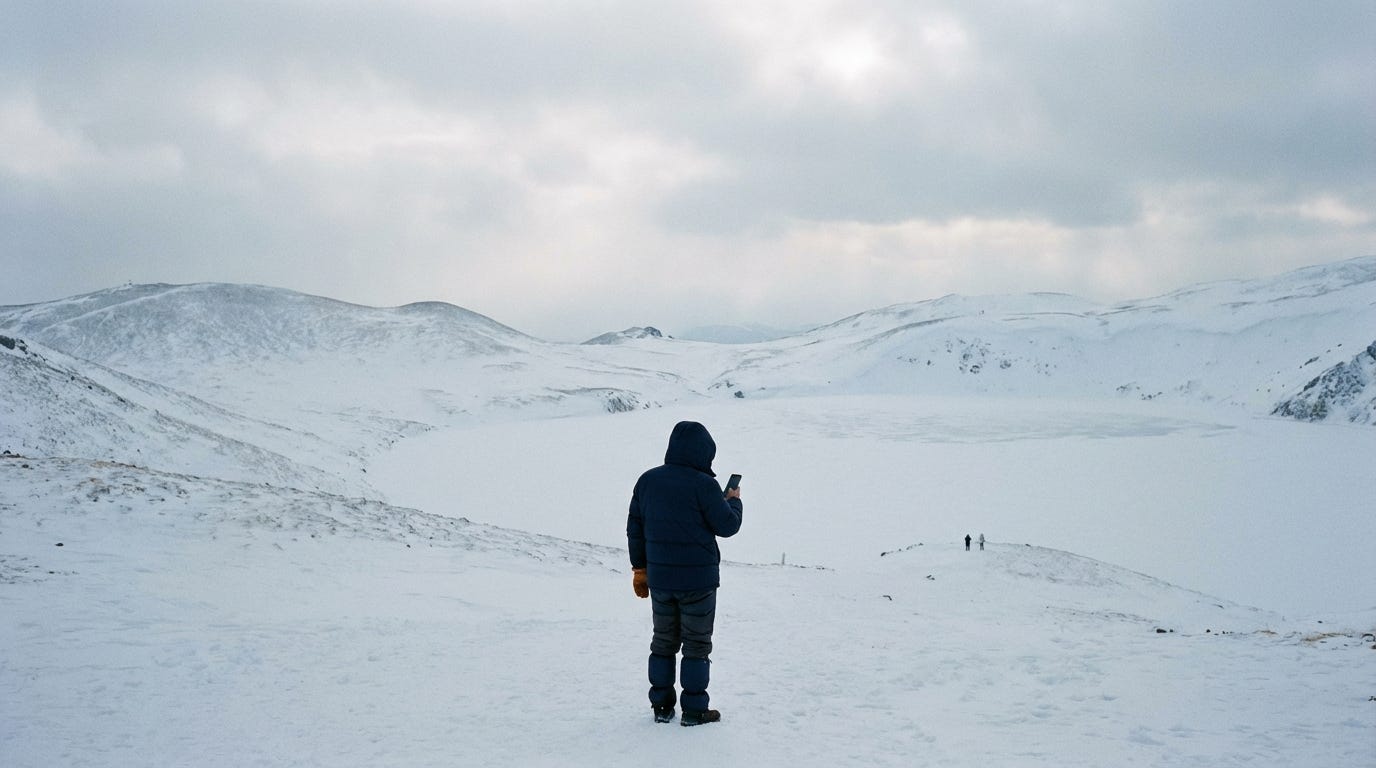
Over ten days, it wrote roughly 50,000 lines of code for me. But the number doesn’t matter. What mattered was that I had started to own an AI. Always online. Capable of doing anything I could do sitting in front of a computer.
Before that trip, I believed the best AI product would be a more powerful tool. After it, I realized I was wrong. The best AI product isn’t a machine you have to sit down in front of. It’s someone you can hand work to at any time.
It wasn’t just code, either. Non-technical teammates started using OpenClaw too - ops had it scraping competitor data and producing full market analysis reports, Growth had it auditing every page on our site, finding SEO keyword gaps, and rewriting the content on the spot. Things that used to require dev resources and a spot on the sprint backlog were now getting done by someone talking into their phone.
So we made a decision.
We already had a self-built Agent product in development - Claude Code SDK, e2b sandboxes, a stack of proprietary Skills. The original vision was the same: distribute the power of Coding Agents to every non-technical person who hadn’t yet experienced what “AGI” actually feels like. Give an AI a task, and it acts autonomously - coding, browsing, operating tools - until the job is done.
But after Changbai Mountain, I realized something: the world doesn’t need another Agent product. You can Vibe Code a beautiful one over a weekend - slick interface, full feature set, good for a thousand likes on X. Then what?
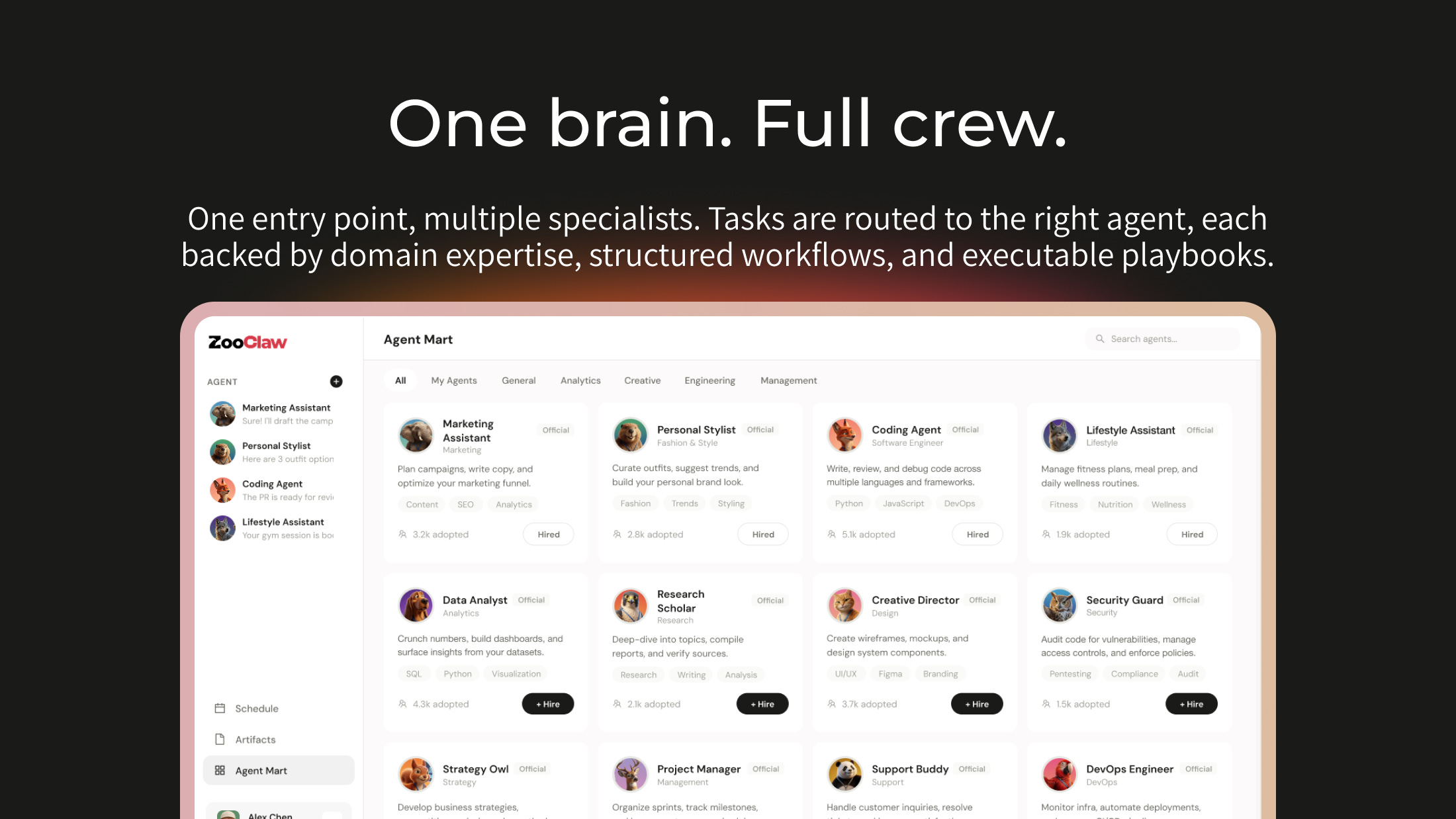
We killed the old product. We decided to build an OpenClaw distribution instead. Based on OpenClaw. 100% compatible with the OpenClaw ecosystem. Focused entirely on making the AI Agent experience work for ordinary people.
We called it ZooClaw.
—
I was born in the 1980s. The explosion and democratization of information technology in my lifetime traces back to one lucky decision.
In 1981, IBM wanted to ship a personal computer fast. So they made a pragmatic choice: build the first IBM PC from off-the-shelf components, and publish the hardware specifications openly. Any manufacturer could produce compatible parts. Any developer could write software for it. That meant Compaq could build a faster PC that ran the same software. Dell could build a cheaper one that ran the same software. You could buy your first IBM PC, and when it was time to upgrade, switch to Compaq, Dell, or anyone else - all your software, all your data, everything still worked. That software and data didn’t belong to IBM. It belonged to you.
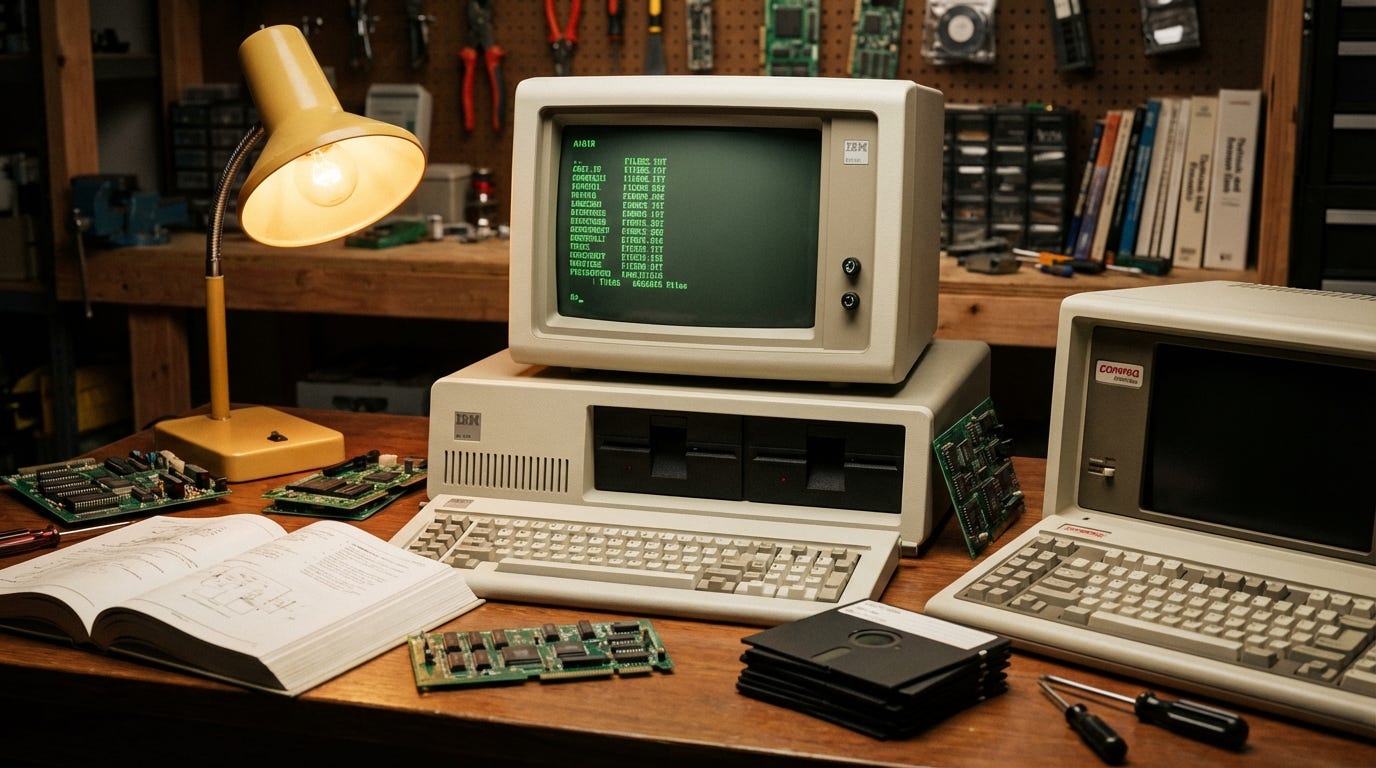
Competition drove prices down. Compatibility built the ecosystem. Within a decade, the personal computer went from a lab curiosity to a fixture on every desk. Not because any single machine was that good, but because openness invited the whole world to participate.
Apple chose the closed path - better hardware, superior design, software locked to their own machines. They lost the entire 1990s. When the Mac finally clawed its way back to the mainstream, its operating system kernel had been replaced with one based on FreeBSD, an open-source project.
Building an OpenClaw distribution isn’t just a business decision. It’s a statement about values.
Today, the market is full of AI Agent products. Each one beautifully designed. Each one incompatible with the others. Each one trying to lock in your data. OpenClaw is already the open architecture of our era - 300K+ stars, a fiercely active community - but it’s still too technical. Even after you get everything installed, one version upgrade can destroy a setup you spent weeks configuring.
What ZooClaw does is turn OpenClaw into an AI Agent that ordinary people can actually use. Not by inventing something new, but by taking what OpenClaw has already proven and integrating it, polishing it, testing it - so you can just open it and start working.
Everything you build on ZooClaw - your memories, your data, your workflows - sits on top of an open ecosystem. The day you want to leave, you pack it all up and go. No barriers. No exit fees. No hostage negotiations.
You should own your AI. Your AI should not own you.
Your memories are yours. Your data is yours. Your workflows are yours. You should be able to take them anywhere, anytime.
That’s why ZooClaw has to be a distribution built on an open ecosystem - not a walled garden. Everything you own is built on open standards.
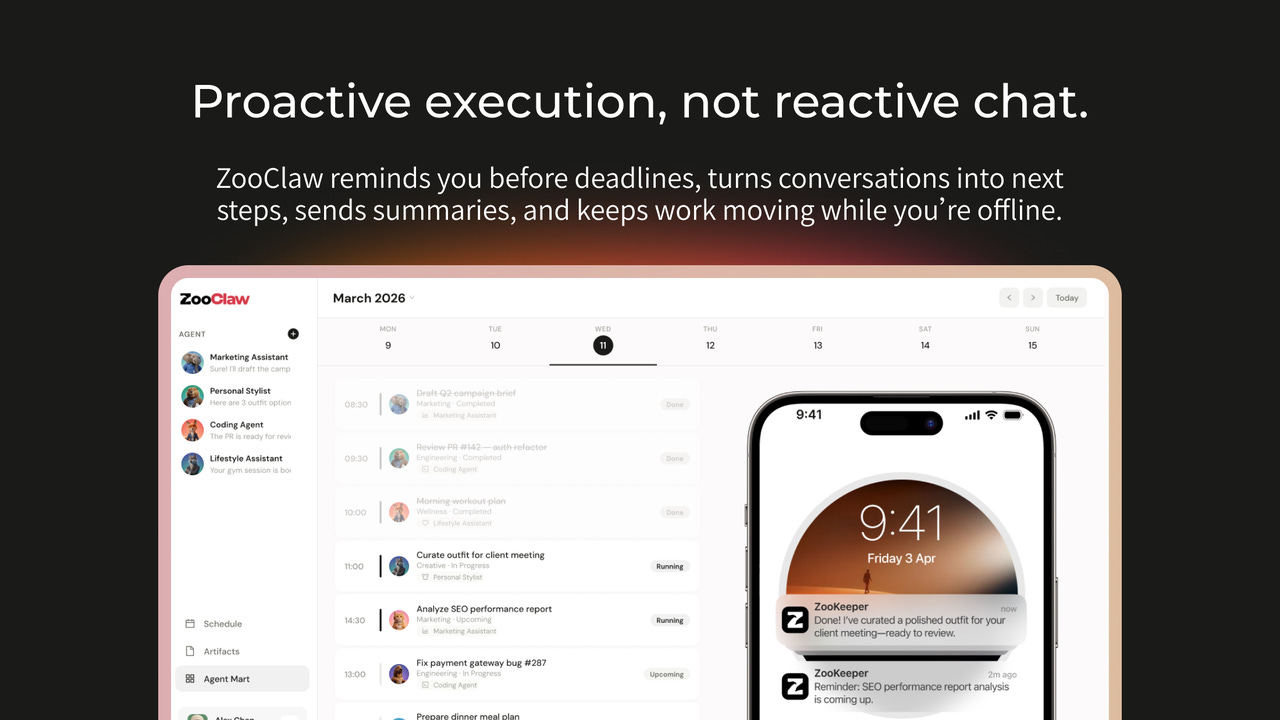
So what does ZooClaw actually do?
Four things. None of them are sexy. None of them will trend on social media. But these are exactly the things that separate “it works” from “it works well.”
It works out of the box. When you buy a PC, you don’t expect your first task to be installing an operating system or hunting for a copy of Office. Your AI Agent should be the same - open it and it works. No signing up for ten accounts, no applying for five API tokens, no configuring three MCP Servers (WTF is MCP?). We did that work already. You just tell it what you need done.
It’s secure. An AI Agent operates your browser, accesses your accounts, handles your files. The risks here are bigger than most people realize. Your LLM tokens can’t be abused. Your credentials can’t leak. The AI’s permissions have to be controlled. In ZooClaw’s cloud deployment, all authentication sits behind a secure gateway - even if someone tries to extract your information through malicious prompts, they can’t reach your keys.
It upgrades without breaking. OpenClaw’s community ships updates fast. That’s a good thing. But for users, every upgrade is a roll of the dice. We sit between you and upstream - continuously tracking changes, running integration tests, making sure the update we push to you doesn’t wreck what you’re already using.
It’s accessible. You shouldn’t need to buy a dedicated computer to use the latest AI. ZooClaw runs in the cloud. Access it from your phone. Delegate tasks from anywhere - the way I did from Changbai Mountain.
Now let me address the elephant in the room.
For the past year, every few weeks another article has told you: 50% of white-collar jobs are about to vanish. AI is coming for you. Learn Prompt Engineering or get left behind.
Fear sells well. But fear is hiding the other half of the story.
“Computers aren’t the thing. They’re the thing that gets us to the thing.” That’s my favorite line from the TV show Halt and Catch Fire.
AI is the same.
When I used my voice to tell an AI to write code, I wasn’t after “an AI.” I was after being free from sitting in front of a screen - so I could watch the scenery with my family and still get the work done. That’s not “jobs disappearing.” That’s work evolving.
An ordinary person - someone who doesn’t code, doesn’t know what an API is, has never opened a terminal - should have this experience too. Not because “learn or be replaced” panic demands it, but because an always-on AI assistant can make your life genuinely better.
Forty years ago, open architecture put a personal computer on every desk. Today, ZooClaw wants to do the same thing - put a truly personal AI Agent in everyone’s hands. Not the platform’s. Not some corporation’s. Yours.
- Xu Wenhao, ZooClaw
Follow on X: https://x.com/sandmagician